Restoration work continues at Sheikh Safi al-Din Ardabili shrine complex
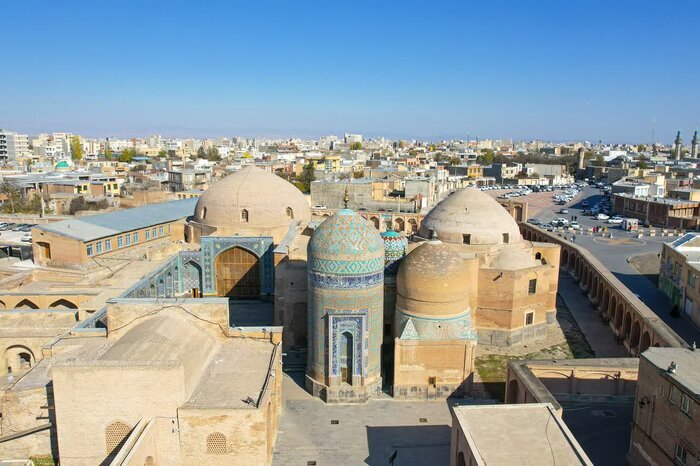
TEHRAN – Conservation, restoration and infrastructure projects are underway at the UNESCO-registered Sheikh Safi al-Din Ardabili Khanegah and Shrine Ensemble in northwestern Iran, the head of the World Heritage site said.
Fardin Eyni said the projects are being carried out under the site's management and conservation plan, with the aim of preserving its authenticity, integrity and Outstanding Universal Value, while improving the structural stability of the complex, protecting historic elements and upgrading its technical and environmental infrastructure.
Among the major projects currently underway are the completion of decorative elements and tilework on the entrance of the Ali Qapu building, construction of arcades in the complex's commercial section, establishment of a secure and standard storage facility, and acquisition of two properties within the site's boundaries, Eyni said.
Other projects include the organization and restoration of the anthropology museum, structural reinforcement and stabilization of the complex's interior decorations, upgrading electronic equipment, and several research and study projects.
The official added that some projects have already been completed, including the installation of railings and protective barriers around the historic site, improvement of the facades along a passageway from the direction of Sheikh Safi Bathhouse, and completion of the tilework on the entrances of the complex's commercial shops.
According to Eyni, the projects will help safeguard the complex's historical, architectural and artistic values, increase the durability and stability of its physical elements, improve the quality of its cultural landscape and strengthen its conservation and visitor-service infrastructure. They are also intended to improve site management and create better conditions for tourists, researchers and heritage enthusiasts.
The Sheikh Safi al-Din Ardabili complex dates back about seven centuries. According to the Ardabil provincial Cultural Heritage, Tourism and Handicrafts Department, the site was originally part of a large garden, where Sheikh Safi al-Din Ardabili taught and guided his followers and pupils. During his lifetime, the site functioned as a khanegah, or Sufi lodge.
Following Sheikh Safi's death in 735 AH (1334-35), his son, Sadr al-Din Musa, built the tomb tower known as Allah Allah at the site of his burial. During the Safavid period, additional buildings were added to the original complex, which subsequently became a dynastic burial complex for members of the Safavid family, including women, children and grandchildren, as well as Shah Ismail I and several prominent figures.
The ensemble contains architectural and artistic elements dating from the 14th to the 17th century, including tilework, mosaic tilework, wall paintings, carved and pierced wooden tomb chests, silver doors and the renowned Chini Khaneh, or Porcelain House.
The complex was inscribed on Iran's national heritage list in 1931 and was added to UNESCO's World Heritage List in 2010.
UNESCO describes the Sheikh Safi al-Din Khanegah and Shrine Ensemble as an architectural and artistic masterpiece and an outstanding representation of the principles of Sufism. The complex developed as a microcosmic city containing bazaars, public baths, squares, religious buildings, houses and offices, and became one of the most prominent Sufi shrines and pilgrimage centers in Iran.
The ensemble also reflects architectural traditions from the Ilkhanid and Timurid periods, combined with influences from Sufi philosophy, and served as a prototype for innovative architectural expressions and later khanegah designs.
The site remains an important tourist attraction in Ardabil, drawing visitors during the country's peak travel seasons. Its architectural decoration includes mosaic tilework, muqarnas, stucco, calligraphic inscriptions, wood carving, silverwork, painting, illumination and gilding.
Ardabil, the capital of Ardabil province, is located in northwestern Iran and is a major destination for domestic and international tourists.
AM
Leave a Comment